
A human‑centred and evidence-based approach to intermittent self‑catheterisation

Erick Entrata, Urology Nurse Specialist and Manager, East Kent Hospitals University NHS Foundation Trust 

Speaking at a symposium at the Association for Continence Professionals conference, sponsored by Convatec, Erick Entrata outlined the work he and his team do supporting people using intermittent self-catheterisation. Erick was speaking for Convatec in his capacity as a paid consultant, the opinions expressed in this article are solely his and not necessarily those of Convatec.

The urology team at East Kent Hospitals University NHS Foundation Trust is made up of nurses, cystoscopists, urology and stone clinical nurse specialists, registered nurses, technicians, and admin colleagues. The trust serves a population of 759,000 people, whose average age is older than the national average.  

Introducing intermittent self-catheterisation


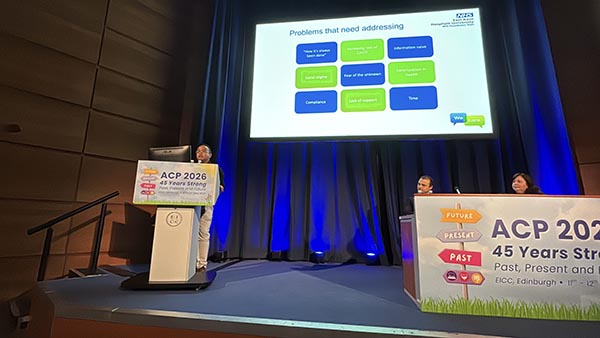
The barriers to clean intermittent self-catheterisation (CISC) are not just clinical: it's a combination of emotional, behavioural, and cultural. Colleagues saying: ‘this is how it's always been done’ is one of the hardest mindsets to shift.

Figures show that urinary tract infections (UTIs) account for more than a quarter of healthcare-associated infections (UK Health Security Agency, 2025) and more than three quarters of hospital-acquired UTIs are catheter-associated (National Institute for Health and Care Excellence, 2017). As well as the impact on patients this adds pressure to the service. There's also a lack of information and support for patients.

Beyond that is the social stigma, the fear of the unknown, the lack of support and the lack of time for patients to understand how to introduce CISC into their lives and for clinicians to teach CISC appropriately. All these factors contribute to the lack of support and therefore of compliance, which can lead to health deterioration. These are the issues that we set out to tackle.


Ask questions


Our team starts by asking questions and being proactive. We check the understanding and what matters most to the patient. It's not listening with the intent to reply, but listening to understand. We don't listen and just think about our practice, we listen to the human being who is in front of us. It is our job to listen and check if the patient understands, if they have confidence in the process, what their compliance and comfort is like – the things that matters to them.


Take a holistic approach


We look at the patient’s mobility status, cognition, social support and lifestyle, using a holistic approach that considers the patient as a complete individual rather than just a bladder problem.


Provide individualised care


Individualised care is vital: no two patients will be in the same place regarding CISC in terms of dexterity and compliance.
 

Shared decision making


When patients feel empowered with a sense of ownership, their confidence improves and the outcome becomes better.


Training in CISC


When it comes to teaching patients about CISC, the method matters. It's essential that we speak their language, we don’t use jargon and we focus on the things that improve their confidence. In the past, our clinic had a high rate of DNAs (do not attends) for CISC, because a generic letter was sent to the patient, just giving the appointment time, with no information about the procedure itself. CISC is potentially going to change the patient’s life, so it's understandably scary for them. We tailored the letters to fit their needs, to provide supportive and clear information about self-catheterisation, and have seen a reduction in the DNA rate.
 

Hands-on training


Most patients learn by doing not by listening. Visuals help, as do diagrams, models and demonstrations. It's really important to have informed patient choice. We need to let the patient know what types of catheters are available, giving them the knowledge, the context and support that they need to choose the catheter that suits them, not the option that's easier for us to teach.
 

Follow-up support


We are teaching someone a procedure that's going to change their life, so we don't discharge them after the clinic, because there's a high likelihood that compliance will not be great. Instead, we bring them back to our dedicated CISC clinic, to see how they are getting on and what support we can offer. 
 

Patient’s choice of catheter


Choosing the catheter is a patient-centred decision. We look at comfort, because they won't use the catheter if it's uncomfortable. That's one reason most catheters have moved towards having advanced hydrophilic coatings or integrated hydrophilic properties. Hydrophilic technology reduces friction and maintains lubrication during insertion and withdrawal.

One of my patients put it perfectly: ‘for the first time, it didn't feel like something being done to me, it felt like something I could actually manage’. That’s the difference that comfort makes. When the catheter feels less intimidating, everything else becomes easier.

Continued care is important. Teaching someone CISC is just the beginning. They need ongoing support, especially when CISC becomes part of their daily life. This is where Me+ becomes incredibly valuable. Me+ is a programme that provides ongoing support and is designed to provide clear information, practical tips, and real-life evidence. This assistance is intended to build confidence and independence of patients. 

Me+ reinforces what we do in the clinic, but in a way that patients can review at home, at their own pace. This programme supports patients to follow up things they might see at the appointment in their own time.


Paper test


The paper test is a simple method. Whenever I teach patients CISC, once they've chosen the catheters that they think they will like or suit them, we place the catheters into a sheet of paper. Hydrophilic catheters leave residue and dry, and they stick to the paper, whereas the Convatec catheter does not stick. This shows the patient that if the catheter glides smoothly on paper it's going to glide smoothly where it matters. Less sticking means less friction, less trauma, and more comfortable insertion for the patient.

Privacy and dignity are important, especially if the patient is of working age and wants the product to be discreet. Convatec has compact products, which are easy to handle and easy to open.


Engaging the wider team


Improving CISC isn't just about the patient, it's about the whole system. We all have colleagues who say ‘this is how we do things’. Change is uncomfortable: it disrupts habits and challenges assumptions, but discomfort is often where progress begins. As we started questioning long-standing catheter practices, we saw a culture shift –colleagues began to understand why we were looking at this, and that opened up conversations.

We're fortunate that we have a dedicated urology emergency department, where the majority of our patients who come in with retention present. We saw this as an opportunity to introduce ISC. This early prevention intervention can stop patients needing to attend trial without catheter (TWOC) clinics, as the current waiting list for our TWOC clinics is 4–6 weeks. Having the discussion with patients at the front door can change their lives.
 
We've talked about CISC – catheter make, appointment, conversations – it all matters. But it's not as powerful as hearing what it actually feels like for a real person. Because for every patient, for every appointment, for every decision made, for every culture shift, there's a human being out there just trying to live their life. So this is the story of someone who uses CISC to show what happens when you get it right.
 

Patient case story


A few months ago, I was diagnosed with a condition that means I have to catheterise all the time. I was not very happy about it, but that's the way it goes.

First they gave me a permanent catheter with a leg bag. The advantage is that you don't need to think about when you have to use the catheter, but the disadvantage is you've got a leg bag and that's not very convenient if you have a child running around or if you want to go for a swim.

The second option was to remove the leg bag, continue with a permanent catheter, but give me an on-off valve that I could control when to catheterise myself. This meant that I had to watch the times that I needed to use the catheter, but it was much more convenient. However, if you want to go to do any exercise in the gym, for example, it's not particularly convenient because it's permanently attached.

On my third visit to the urology clinic, Erick showed me the Convatec product – how to work the system, how to insert it, and how to use it. With a bit of practice, I became fairly confident in using it, and I found it a lot more convenient than any other system. You have to set alarms on your phone to make sure that you're not going too long between emptying your bladder, but that's not a problem. The great advantage is the discretion. If I go to my relatives, I can easily use their facilities without any discomfort or problems. But more importantly, if I want to go out for a meal, go for a drink or go to the supermarket, I can use the toilets there without any difficulty. All I do is take a wet wipe, a dry wipe and the catheter, go to one of the toilets and then just do the necessary, insert the catheter, empty your bladder, clean up, put it back in the sealed pack and there we are. It’s very convenient.
 

Conclusions


At the end of the day, CISC isn't just a clinic. It allows us to provide patients with dignity and independence and allows them to restore their own lives. But it is not powerful if we don't deliver the message through compassion and clarity. So my challenge for all of us is this – let's not wait for the system to change, let's change the system. One patient, one catheter at a time.

References


National Institute for Health and Care Excellence (2017) Healthcare‑associated infections: prevention and control in primary and community care. CG139. https://www.nice.org.uk/guidance/cg139 (accessed 15 May 2026)

UK Health Security Agency (2025) Point prevalence survey on healthcare-associated infections, antimicrobial use and antimicrobial stewardship in England, 2023. https://assets.publishing.service.gov.uk/media/6827325d010c5c28d1c7e728/HCAI-AMU-PPS-2023-report.pdf (accessed 15 May 2026)