Products that make catheterising easier
Depending on your patient’s needs and abilities, you may wish to discuss the use of catheter sets for use out of the house, specially designed catheters, handles or penis holders for those with reduced dexterity, mirrors for women who find it difficult to locate the urethral opening, or leg spreaders to help hold the legs apart during catheterisation.
As well as physical products, a patient support system like Me+ (
https://www.convatec.com/en-gb/continence-care/meplus-support/) can be immensely helpful for patients who have started catheterising, as they have access to expert information and support when and where they need it.
Reviewing with the patient
Don’t forget to give the patient contact details for urgent queries (while encouraging them to try each type for a reasonable period of time so they can get used to using it) and book in an appointment to review this while they are there.
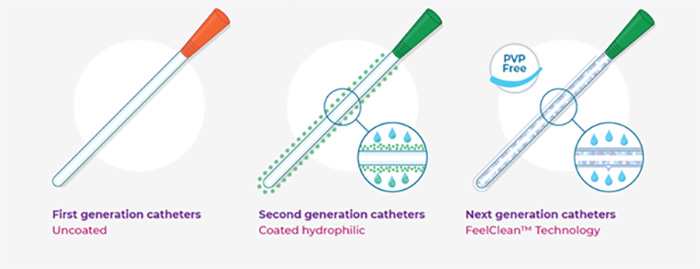
- Material – is the catheter comfortable to insert and remove? If not, would they benefit from a third generation catheter rather than one with a PVP-based hydrophilic coating. Traditional hydrophilic catheters have PVP coatings that make them slippery on the way in, but they can become sticky when removed (Pollard et al, 2022). Third generation catheters have the slippery hydrophilic properties integrated inside the catheter itself so they do not stick, protecting the delicate urethra?
- Length – once the patient is comfortable catheterising, might they benefit from having access to a compact catheter for use outside the home. This can help them maintain their independence.
- Size – once the patient has got used to using a catheter, you could ask them if they wanted to try a larger size as this would allow them to drain their bladder more quickly..
Resources such as Continence Product Adviser (
https://www.continenceproductadvisor.org/catheters) can be useful for both patients and healthcare professionals as a source of independent product information.



 Contact us
