From idea to publication: a guide for new authors 

Part 1: Conference presentations


Chelsea Creak PhD
Senior Medical Writer 
Convatec

Sharing research at conferences is a powerful way to influence clinical practice and grow professionally. However, the process of submitting and presenting your work can feel unfamiliar at first. This guide is designed to support and encourage you at every stage, from identifying the right conference, to creating an engaging presentation. 
 

Why share your research?



You don’t have to have contributed to a big, exciting, randomised controlled study to publish your research. Case studies can highlight unusual presentations, novel treatment approaches and unexpected outcomes, which can help to inform and refine clinical practice.
 
Sharing your work through publication can also enhance your professional development, by improving your communication skills and your ability to analyse and interpret data.

Why should you submit research to conferences?

 
  • Rapid dissemination of results
  • Contribute to collective learning and improvements in patient care
  • Gain feedback from your peers
  • Networking opportunities 
  • Career development 
Disseminate your results

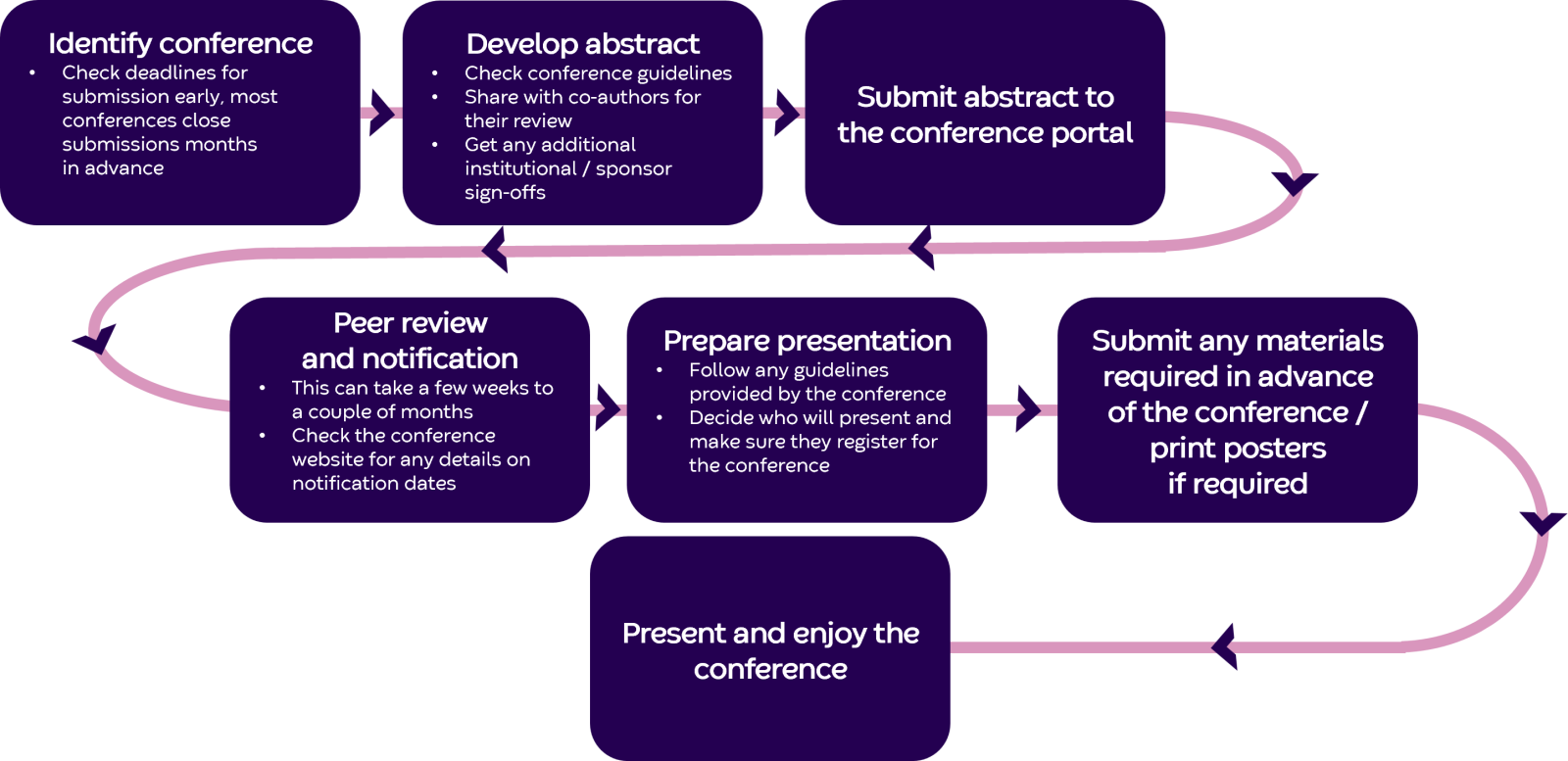
Overview of the process of submitting an abstract to a conference


Process of submitting an abstract to a conference

Selecting a conference

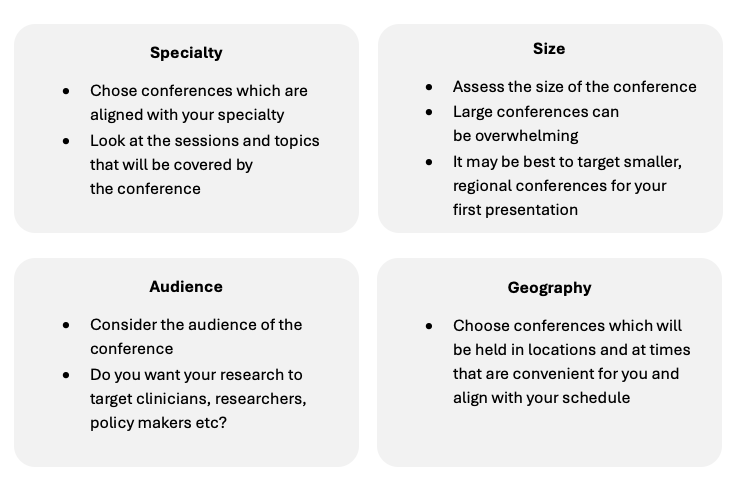
There are several aspects to consider when selecting a conference to submit your research to. These include: 

How to chose a conference to present at
 

Tips for designing effective posters and presentations

A clear, well-designed poster or presentation helps your audience quickly understand your work and its relevance to practice. It is vital to keep your content focused, accessible, and visually engaging. Below are some tips to help you design effective posters and presentations:
 

  • Stick to conference guidelines
  • Maintain consistent margins and space between sections for a clean appearance
  • Use clear headings 
  • Use visuals where possible, and keep text to a minimum
  • Ensure images are clear and sharp
  • Be consistent in the use of colours and fonts throughout 
  • Keep to a limited colour palette (2–3 colours), choose a light background with dark text
  • Make sure the poster is readable from 1–2 m away, use fonts of at least 24 pt for posters
  • Have someone copyedit for you before you print the poster / present your oral presentation
  • Break up text using bullet points
  • Most conferences offer a template which can be used

Types of conference presentation

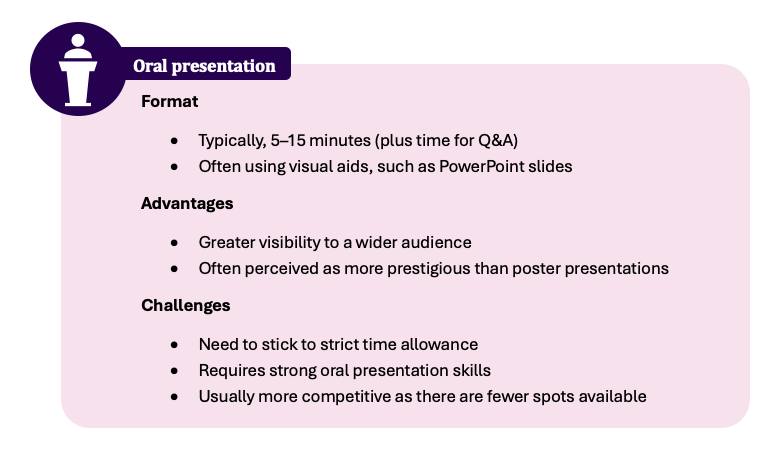
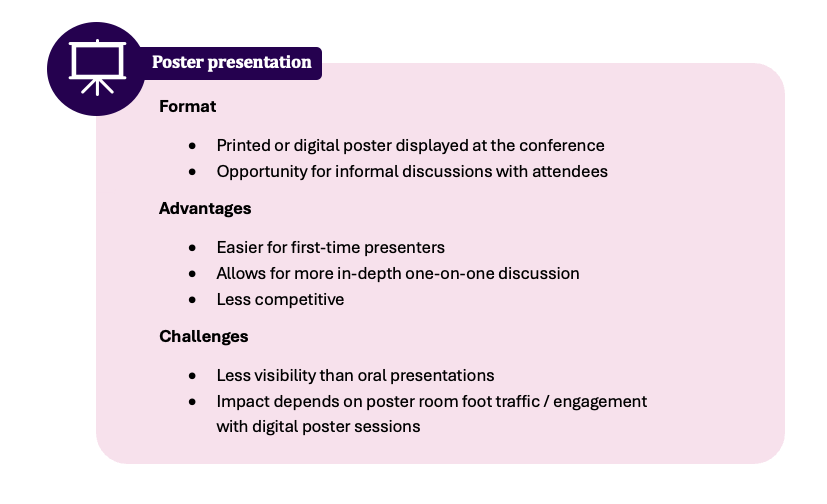
When you submit your abstract to a conference, you will be asked whether you wish to present the work as a poster or as an oral presentation. Both formats offer valuable opportunities to share your work, and the best choice depends on your experience, confidence and the nature of your project.

Pros and cons of oral presentationsPros and cons of poster presentations  
If you are interested in writing a manuscript or submitting your research to a conference and would like more information or support, reach out to your Convatec contact or email Chelsea (Chelsea.creak@convatec.com)
 

FAQs for abstracts and posters

What is an encore?

An encore abstract is the resubmission of an original abstract that has previously been presented at another event, conference or congress.
 

Are encores allowed?

  • Encores are allowed as long as both the original and subsequent conferences allow for them
  • Presentations to the same audience should be avoided, encore abstracts should be focused on trying to expand reach 
  • Consider whether it would be more appropriate to emphasise different aspects of the study to different audiences when developing abstracts.
 

Will presenting at a conference jeopardise publication of a manuscript?

Conference presentation should not jeopardise publication of a manuscript, but journals will usually request that you state where the data have been presented previously.