Patient information: what and how?

Patient information is crucial to ensure patients fully understand their conditions and management, to facilitate engagement and support their knowledge. This article looks at the results of a recent Facebook poll on patient information and highlights the place of Me+ in providing information you can share and use with your patients. 


What is patient information? 

Patient information can cover anything from tips on navigating services to patient rights, knowing what questions to ask to legal issues (The Patients Association, 2026). However, in the context of this article we are specifically referring to information provided to patients relating to the clinical aspects and management of a particular condition, in this case urinary incontinence. 

Just as each patient is different, so will be their needs from the information that healthcare professionals give to them. 

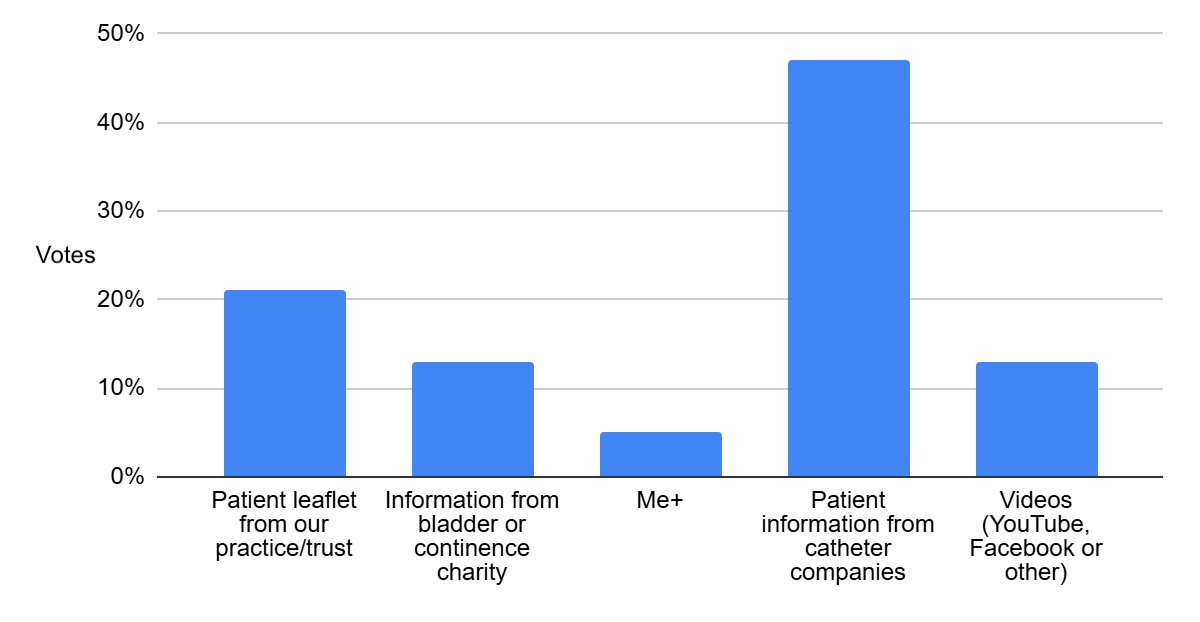
We asked members of the Clinical Leadership for Continence Care Facebook group to tell us which resources they provide for or recommend to patients using intermittent self-catheterisation, and we received a wide range of responses (Figure 1). 

Respondents were able to select as many options as they wanted. The most popular resource was patient information from catheter companies, used by 47% of respondents. Information provided as leaflets from their practice or trust was used by 21% of respondents, with information from a bladder or continence charity used by 13%. Video information (from YouTube, Facebook or other sources) was used by 13% of respondents, with 5% using Me+ from Convatec and 1% using other sources.


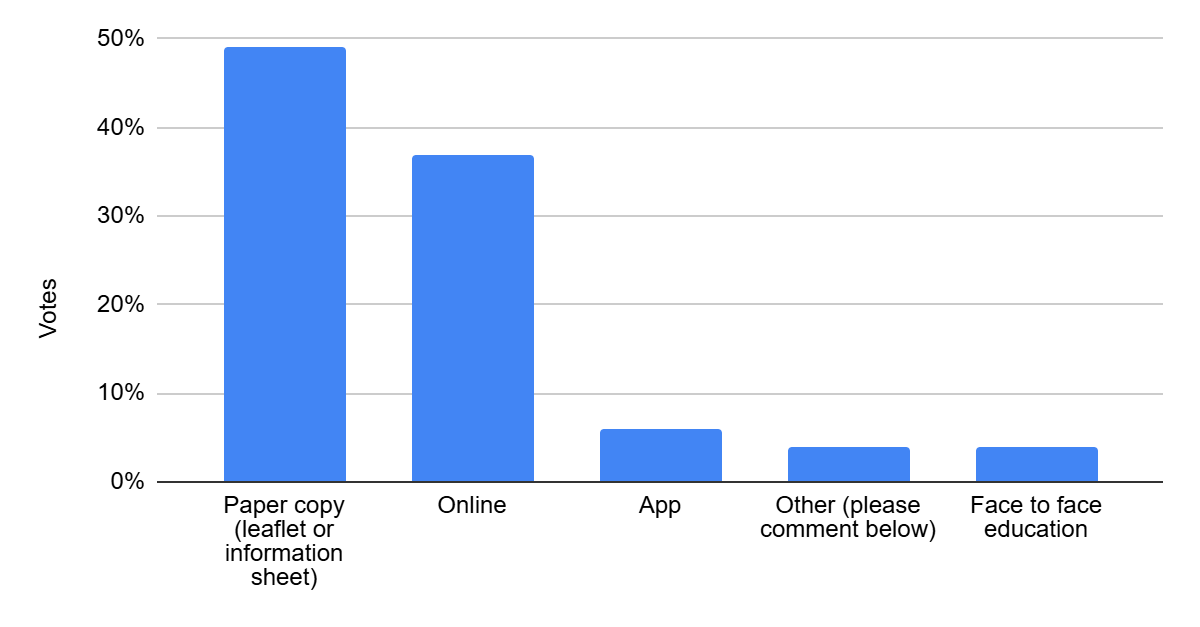
We then asked group members how they thought that patient information should be made available. Figure 2 shows the responses – again, respondents were able to select as many options as they wanted.  

The majority of respondents (49%) said that a paper copy (leaflet or information sheet) was their preferred option, with online resources the next most popular at 37%.  Apps were preferred by 6% and 4% preferred talking to the patient in person, saying ‘[it is] hard to beat face to face education’. 
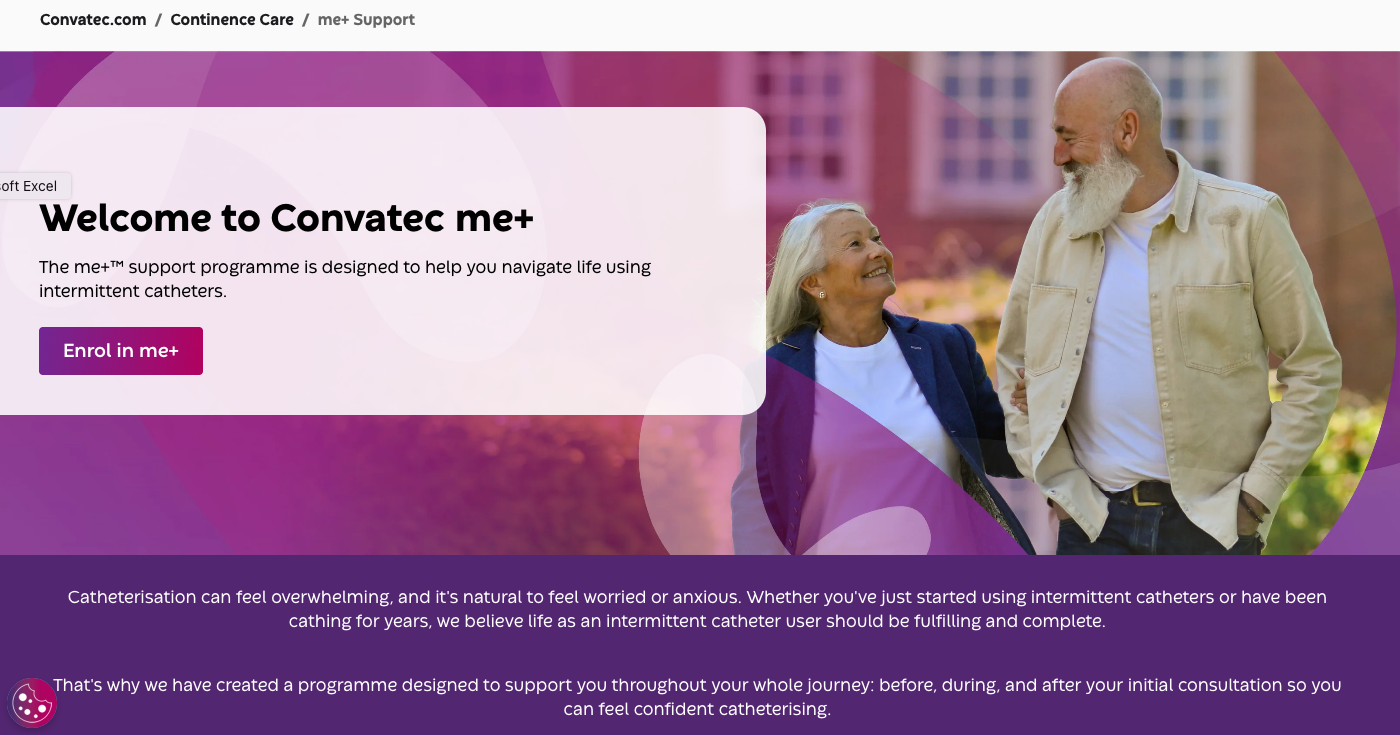
Convatec Me+ home page


Responses to the question ‘Which resources do you provide for or recommend to patients using intermittent self-catheterisation?’
Figure 1. Responses to the question ‘Which resources do you provide for or recommend to patients using intermittent self-catheterisation?’.


Responses to the question ‘How do you think patient information should be made available?’
Figure 2. Responses to the question ‘How do you think patient information should be made available?’. 

When face to face education isn’t possible 

While face to face education may be the ideal option for many healthcare professionals and patients, there are a number of hurdles to overcome when using this. These include:

  • Limitations on time

  • Patient’s ability to understand and retain information after one consultation
  • Accessibility constraints
  • Patient anxiety 
  • Exclusion of marginalised groups.
Even in situations where you are able to begin managing incontinence with a face to face conversation with the patient, being able to provide supporting information that reinforces the points you have covered, gives practical advice and can be relooked at by the patient whenever and wherever they want can be crucial in encouraging concordance with practice. Particularly with conditions such as incontinence, which are often lifelong and for some patients may cause embarrassment or stigma, providing accessible information helps to reduce patients’ concerns and allows them to process the situation in their own time. 
 

Where does Me+ fit in? 

As we saw above, healthcare professionals want to be able to provide both online and printable leaflets for patients. Both of these are available via Me+ from Convatec, a comprehensive package to support patients who are using intermittent self-catheterisation, whether they have been doing this for years or are new to the process. Me+ is a programme of practical tools and videos designed to support patients throughout their whole journey – before, during, and after the initial consultation – so they can feel confident catheterising.
 

Me+ includes educational tools, an emotional wellbeing programme and personalised video guides to catheterisation. Read on to find out more about each of these aspects and see how they could help you to support your patients. 


Educational tools 

The educational tools in Me+ have all been devised in collaboration with a group of expert nurses. They can be accessed at https://www.convatec.com/en-gb/continence-care/meplus-support/educational-tools/ The tools include an introductory guide to intermittent catheterisation, a downloadable PDF called Intermittent catheterisation and you which takes patients through the process from before the consultation to support provided once the patient is using intermittent self-catheterisation, and a support document called Making intermittent catheterisation work for you. This is a guide to aspects that patients might want to discuss with their healthcare professional, but which can also be really useful for healthcare professionals to use to guide initial discussions and signpost users to sources of more information. 


Emotional wellbeing programme 

Having to catheterise can be a big life adjustment for patients, both physically and emotionally. The me+ emotional wellbeing programme addresses the emotional impact of catheterising through a ten module programme.
 

These modules aim to build patients’ confidence with catheterising, reduce fears and worries, help them navigate how to live the life they want, connect with loved ones, overcome intimacy issues and work through difficult thoughts and feelings, to ultimately live confidently. There is also an accompanying workbook for patients to use, which allows them to reflect on the process and to follow guided exercises.  


Personalised video guides

The Personalised Video Guide allowing intermittent catheter users to choose the information they want whenever they need it, so they feel empowered to live confidently. These videos can be personalised for men or for women, and also for people who use wheelchairs. Convatec understands that no two intermittent catheter users are the same, so why should the way that they learn be 'one-size-fits-all'?
 

Me+ meets many needs

Me+ provides both online and printable information and advice for intermittent catheter users, and can work for those who are just starting to use catheters as well as it works for those who have been catheterising for a long time. Why not take a look, so that you’re ready to use this with your next patient and support them on their catheterising journey? 
 

Reference

The Patients Association (2026) Patient information and guidance. https://www.patients-association.org.uk/pages/category/information-and-guidance (accessed 8 June 2026)