
Photograph: Pepermpron/Shutterstock
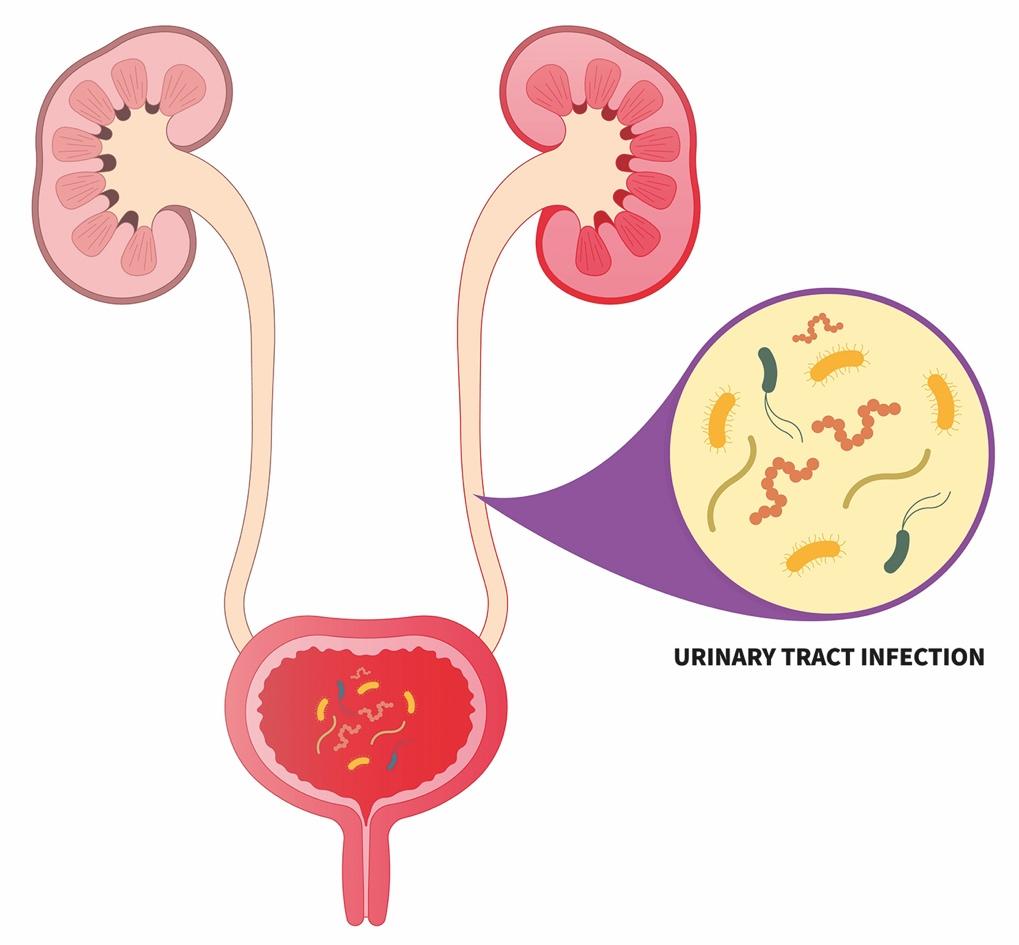
Assessment findings should inform an individualised care plan, including review of catheter choice and technique, bladder emptying patterns and possible causes of recurrent UTIs. New or persistent urethral pain, bleeding, difficult catheter passage or recurrent infections warrant further assessment. Fever, pain or any deterioration need immediate assessment for potentially serious infection.
Collins L (2019 Intermittent self-catheterisation: good patient education and support are key. Br J Nurs 28(15): 964–6
Dellimore KH, Helyer AR, Franklin SE (2013) Evaluation of an integrated amphiphilic surfactant as an alternative to traditional polyvinylpyrrolidone coatings for hydrophilic intermittent urinary catheters. J Mater Sci Mater Med 24(8): 1824–35
European Association of Urology Nurses (2024) Urethral intermittent catheterisation in adults. Available online: https://nurses.uroweb.org/guidelines/urethral-intermittent-catheterisation-in-adults
Givler DN, Givler A (2023) Asymptomatic bacteria. Treasure Island (FL): StatPearls Publishing; 2023 Jan-. Available online: www.ncbi.nlm.nih.gov/books/NBK441848/
Kinnear N, Barnett D, O’Callaghan M, Horsell K, Gani J, Hennessy D (2020) The impact of catheter-based bladder drainage method on urinary tract infection in spinal cord injury and neurgenic bladder: a systematic review. Neurourol Urodyn 39(2): 854–62
Leaver R (n.d.) Intermittent self-catheterisation. Urology and Continence Care Today. Available online: www.ucc-today.com/journals/issue/launch-edition/article/intermittent-self-catheterisation-ucct
Loveday HP, Wilson JA, Pratt RJ (2014) Epic3: national evidence-based guidelines for preventing healthcare associated infections in NHS hospitals in England. J Hosp Infect 86(1 Suppl): S1–70
National Institute for Health and Care Excellence (2018) Catheter-associated urinary tract infection: antimicrobial prescribing guideline. Available online: www.nice.org.uk/guidance/ng113/evidence/evidence-review-pdf-6599496349
National Institute for Health and Care Excellence (2023) Urinary tract infections in adults. QS90. Available online: www.nice.org.uk/guidance/qs90/chapter/Quality-statement-3-Antibiotic-treatment-for-asymptomatic-bacteriuria-in-men-and-non-pregnant-women
Pollard D, Allen D, Irwin N, Moore JV, McClelland N, McCoy CP (2022) Evaluation of an integrated amphiphilic surfactant as an alternative to traditional polyvinylpyrrolidone coatings for hydrophilic intermittent urinary catheters. Biotribology 32(Dec 2022): 100223
Royal College of Nursing (2025) Catheter Care: RCN Guidance for Healthcare Professionals. Available online: www.rcn.org.uk/Professional-Development/publications/rcn-catheter-care-guidance-uk-pub-010-988
Willette PA, Coffield S (2012) Current trends in the management of difficult urinary catheterizations. West J Emerg Med 13(6): 472–8
Young J (2025) Catheter-associated UTIs and AMR: a global crisis. J Community Nurs 39(3): 50–5
 Contact us